Featured Headlines:
PSC Check Processing Checks Out
What a Ship Show!
- If you think carriers are ordering a few new vessels, think again.
- The global container fleet is about to receive enough new capacity (inventory) to make even Costco say, “Easy there!”
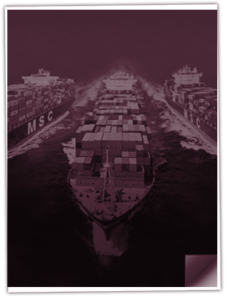
- More than 11 million TEUs are on order worldwide. Even after scrapping older ships, the fleet is expected to grow roughly 11% by the end of 2027.
- Great news if you build ships. Less relaxing if you own them.
- MSC Is Building an Empire
- MSC alone has nearly 2 million TEUs on order, roughly the size of ONE’s entire current fleet.
- CMA CGM, COSCO, Evergreen and ONE aren’t exactly sipping lattes on the sidelines.
- The industry’s biggest players are betting billions that tomorrow’s cargo will justify today’s caffeine-fueled optimism.
- These Aren’t Grandpa’s Containerships
- Most are massive, fuel-efficient vessels between 12,000 and 24,000 TEUs.
- LNG and methanol dual-fuel engines are increasingly common, while many others are designed for future fuel conversions.
- They’re greener, smarter and very hungry for cargo.
- The Domino Effect
- A new 24,000-TEU giant doesn’t replace an old ship. It pushes a 16,000-TEU vessel into another trade, which bumps an 8,000-TEU ship, and so on.
- Before long, the global fleet looks like airline passengers swapping seats after boarding. Caution, coffee may be spilled!
- 2027 Is the Wake-Up Call
- Deliveries surge next year. Unless global trade suddenly downs a triple espresso, carriers will have more steel chasing the same freight.
- That usually leads to lower rates, blank sailings, alliance reshuffling and a fresh menu of creatively named surcharges.
- The Biggest Wildcard
- It’s still the Red Sea. If Suez fully reopens, ships stop sailing around Africa, and shorter voyages require fewer vessels.
- The industry could effectively “discover” another 10% of capacity without building a single ship.
- Shapiro’s Take
- Today’s market feels tighter than the orderbook suggests because ships are still taking the scenic route around Africa.
- If Suez normalizes while this wave of new tonnage arrives, carriers may find themselves competing much harder for cargo in 2027.
- Good news for shippers. Carrier pricing teams, your barista already knows that Venti or Trenta order is a-coming!
Paper Tigers
- When the Cheapest Ocean Freight Can Become the Most Expensive Decision
- If you’ve been watching carrier websites lately, you might think Transpacific rates have fallen off a cliff.
- You’re not imagining things… or are you?
- Maersk and Hapag-Lloyd (the Gemini Cooperation) continue to publish online spot offers that often sit $1,500-$2,800 per FEU below traditional FAK rates.
- Those eye-catching numbers have become the market’s favorite screenshot, whether or not they become anyone’s favorite shipment.
- The Catch? These Aren’t Simply “Cheap Rates”
- They’re forward-looking, sailing-specific products built for shippers willing to trade flexibility for price.
- Depending on the booking, that bargain may include:
- Cancellation or amendment fees
- Very limited free time
- Applicable surcharges
- Operational restrictions
- Limited availability if plans change
- They’re legitimate products… just not apples-to-apples with the rates moving most commercial freight.
- Think of It As Basic Economy for Ocean Freight
- Terrific! Errrr, until you need to change your booking, need another day of free time, or expect reality to cooperate with your supply chain.
- Sometimes the cheapest booking becomes the most expensive shipment.
- Here’s What’s Genuinely New
- For decades, the “paper market,” traditional FAK quotations negotiated through carriers and forwarders, has largely defined market pricing.
- Suddenly, carrier websites are trying to become the market.
- Online quotes are influencing expectations long before they influence cargo.
- In other words, perception is sailing faster than containers (or reality!).
- Then August 1 Happened; Score One for the Paper Market!
- Most observers expected the flood of online offers to sink the GRI before it left port.
- Instead, West Coast rates climbed roughly $700 per FEU, while East Coast pricing rose more than $1,300 per FEU.
- Sometimes the internet writes one story while the booking desks quietly write another.
- Where Do Rates Go from Here?
- West Coast: We expect online offerings and expanding capacity to pressure rates downward rather quickly over the coming weeks.
- East Coast: Blank sailings, healthier vessel utilization, and comparatively tighter capacity should keep pricing on firmer footing despite continued online competition.
- Mick, Take Us Home!
- “You can’t always get what you want…but if you try sometimes…” …you get exactly what you clicked on!
Section 232's Plus-One List
- Steel, aluminum, and copper have been working the Section 232 velvet rope for quite some time. Now, the Department of Commerce (DOC) is reviewing additional derivative articles that could land on the guest list.
- And, dear readers, “derivative” is the operative word here. The potential additions aren’t necessarily hunks of raw metal arriving at the border. They’re downstream products made from or incorporating steel, aluminum, or copper.
- This isn’t a brand-new trick from the 232 playbook. The existing framework provides a process for expanding the scope of covered derivatives, which means the tariff guest list can continue changing as additional products are considered.
- For importers, there’s no new tariff math to do just yet. The important thing is knowing which products are waiting outside the velvet rope and watching to see which ones the DOC bouncers ultimately let through.
- The practical takeaway is simple. Companies importing products with significant steel, aluminum, or copper components should continue watching Section 232 developments closely, even if their merchandise isn’t currently on the list.
- After all, today’s wallflower could be tomorrow’s plus-one.
- You can review the Federal Register Notice here: Implementation of Duties on Additional Aluminum, Steel, and Copper Derivative Articles under Section 232 (2026-15961).
PSC Check Processing Checks Out
- Customs has officially joined the rest of society in looking at checks and asking, “You still use those?”
- Effective August 5, U.S. Customs and Border Protection (CBP) is requiring electronic payment when a Post Summary Correction (PSC) results in additional duties, taxes, or fees owed.
- Checks and cash are out. ACH Debit and ACH Credit are in. The change itself is pretty simple. The instructions for accomplishing it are…considerably less so.
- ACH Debit works through the Automated Broker Interface (ABI). CBP issues the statement, the filer reviews it and submits an electronic payment authorization, CBP accepts or rejects the transmission, and a final statement serves as the receipt. The bank account is typically debited about two business days after CBP accepts the authorization.
- ACH Credit puts more of the action on the filer and its bank. CBP supplies the required payment format, the filer initiates the transaction through its financial institution at least one day before settlement, and CBP posts the payment when everything matches.
- And this is where we’ll exercise some editorial restraint. There are routing numbers, payer identifiers, settlement dates, authorization messages, error transmissions and enough additional payment mechanics involved with both of these processes to make your Accounts Payable team suddenly remember an important meeting.
- The important takeaway is much easier: If a PSC creates additional money owed to CBP, make sure your electronic payment process is ready.
- For everyone who actually does need the weeds, CBP has graciously preserved all of them in CSMS # 69428352 – Modifications to the Processing of Post Summary Corrections.
- Checks had a good run. Please allow three to five business decades for us to process our feelings.
We're Not in Kansas Anymore
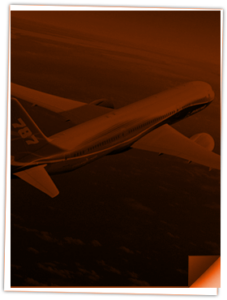
- Air cargo’s forecast for the rest of 2026 is less “partly cloudy” and more “everyone to the basement.”
- Dorothy just looked out the window, cursed, and decided she’d rather stay in Kansas.
- Three storm systems are bearing down on the industry:
- Storm Front #1: Demand is heating up. Global airfreight demand is running about 4% ahead of last year while capacity growth is struggling to keep pace. Boeing and Airbus still can’t build widebodies fast enough, so the freighter fleet is pulling double shifts.
- Storm Front #2: Freight rates have gone from “chance of showers” to “flash flood warning.” Analysts started the year expecting rates to fall as much as 10%. They’re now forecasting increases of 5-15%, while nearly half of Q2 freight moved through the spot market.
- Storm Front #3: AI keeps making it rain. Semiconductor demand continues to overpower the fading China-U.S. e-commerce market, with chip sales surging and Taiwan’s economy riding the AI wave.
- The official forecast? Expect turbulence. Keep your tray tables upright and your contract rates flexible.
- And what about Dorothy? She advises keeping one hand on Toto and the other on your capacity allocation!
Asia's Airlines Trade Up
- Asia’s cargo airlines just pulled off the logistics equivalent of dumping their ex and marrying into money.
- Cross-border e-commerce was the dream partner until the U.S. and Europe killed de minimis. Suddenly those tiny Temu parcels stopped returning calls.
- Fortunately, the airlines had already started flirting with AI hardware.
- Korean Air’s cargo revenue jumped 46% in Q2, driven by semiconductors, servers and data-center equipment rather than bargain T-shirts.
- Japan Airlines says tech products accounted for 80% of export growth outside China. EVA now gets roughly half its cargo revenue from AI shipments, while Cathay even built new loading software to pamper high-bandwidth memory. Is that incestuous?!
- AI hardware is only about 7% of airfreight volume but more than half its value. Turns out dating billionaires really does improve your lifestyle.
Rails, Rigs & Rising Rates
- Pencils, Paperwork & Permission Slips
- Well, well, well… Union Pacific and Norfolk Southern finally finished their homework. After spending two months sitting in the Surface Transportation Board’s study hall, the railroads marched back Monday with binders bulging, boxes checked, and, because every teacher loves a showoff, a little extra credit.
- Their freshly fattened Committed Gateway Pricing plan practically pours open the portal for competitors. Eligible freight nearly doubles, bulk unit trains join the party, and rivals like BNSF and CSX can cobble together competing service across the combined network without conducting a courtroom drama over every carload.
- The STB’s response? Essentially, “Promising. Proceed… but politely.” Environmental reviews and public hearings now await, the governmental equivalent of being told you passed the pop quiz but still have three essays due before recess.
- Ports, Pavement & Pleasant Plot Twists
- Meanwhile, CSX quietly pulled a pretty clever prank on East Coast routing.
- For years, freight flowing toward Indianapolis practically pledged allegiance to Port Newark and Port Elizabeth. Want Midwest? Welcome to New York traffic. Not anymore.
- CSX slipped open a Virginia-to-Indianapolis victory lap, running five-day service straight from Virginia International Gateway to Indianapolis while matching New York-New Jersey transit times, minus the tunnel tolls, traffic tantrums, and turnpike therapy sessions.
- It’s less a new lane than a logistics loophole, the kind dispatchers discover, blink twice at, and then pretend they knew about all along.
- Barrels, Bills & Budget Bruises
- And now… the villain returns. “Hello again, Diesel.”
- LTL carriers may be advertising single-digit base-rate increases, but diesel is the iceberg below the waterline, the base rate catches your eye, while the fuel surcharge sinks the shipping budget.
- The national average climbed to $5.31 per gallon, up $1.51 year over year, helping push long-distance LTL producer prices 18% higher in June after back-to-back twenty-percent-ish increases.
- The EIA promises relief eventually, around $4.11 by 2027, which is comforting in the same way a meteorologist saying “winter ends in April” comforts someone shoveling snow in January.
- Until then, every freight invoice arrives wearing a fuel surcharge like it’s the latest fashion trend, and unfortunately, this one’s mandatory.