
Meet the Supplier Family Tree. Who Is Actually Making Your Goods?
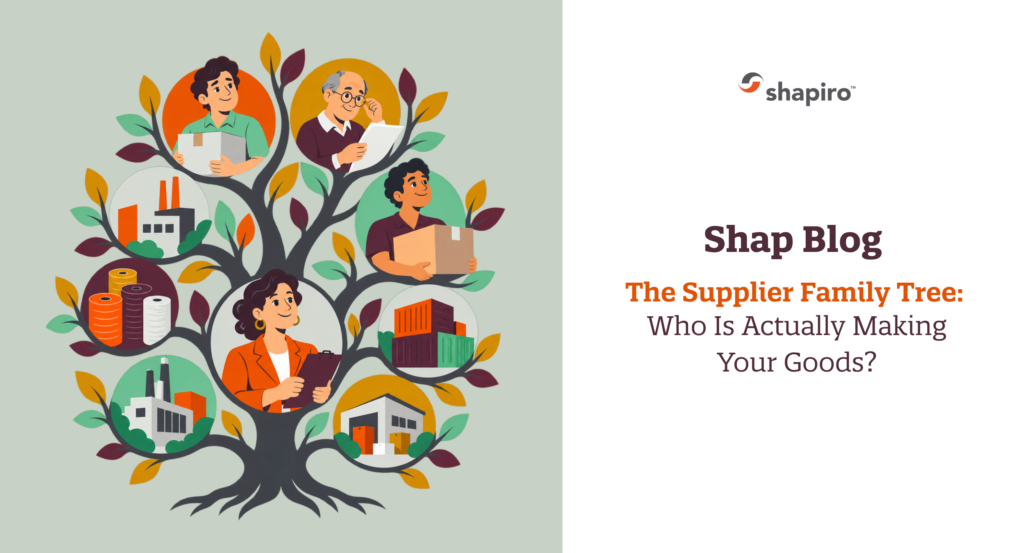
You know your overseas supplier. You know your account manager, your usual lead times, and how many follow-up emails produce a revised invoice. After years together, they feel like family. Possibly the cousin who takes three weeks to RSVP, but family nonetheless.
Now for the awkward reunion question: does that supplier actually manufacture your goods? If someone else makes them, who supplies the materials? You know who brought the casserole. Do you know who cooked it?
The familiar name on your purchase order may be just one branch of a much larger supplier family tree. Knowing who is related to whom—and through which transaction—can matter when explaining country of origin, answering customs questions, or obtaining sourcing records.
U.S. Customs and Border Protection (CBP) is exploring ways to make those connections more visible through its voluntary Global Business Identifier (GBI) test. Recent changes broaden the parties and identifying information the test can capture.
For small and midsize importers, the question is how much of that family tree you can document before someone asks for introductions. “We have always dealt with Cousin Bob” is a relationship history, not a sourcing record.
Your Direct Supplier Is the Reunion Organizer
Supply chain traceability means being able to identify the relevant businesses and production locations behind your goods and connect them through supporting records. That involves more than maintaining a list of vendors.
The Seller and Manufacturer May Be Different Businesses
Consider an importer buying finished kitchen products from a trading company. The trading company coordinates the order, a separate factory makes the goods, and other businesses supply components. Think of the seller as the aunt organizing Thanksgiving: she handles the invitations, but that does not mean she grew the potatoes.
There is nothing inherently suspicious about that arrangement. Trading companies and intermediaries can provide valuable sourcing and coordination services. You just need to distinguish the person arranging dinner from the people producing it—and obtain the information relevant to your customs obligations.
Useful records explain identity and activity. Every family has a cousin whose job nobody can quite describe. Your supplier map needs more than “something in manufacturing”: a legal name, a clear role, and records connecting that business to the shipment.
The depth of information needed depends on the goods, sourcing arrangements, and applicable requirements. Some questions require looking beyond the finished-goods factory to relevant material sources. The aim is a usable map, with the documentation needed to support it.
CBP Would Like to Meet the Extended Family
The GBI test explores the use of business identifiers to better identify supply-chain parties and improve traceability and visibility. Identifiers can help connect a business to information about that entity and, depending on the identifier, its supply-chain relationships.
In its October 1, 2026 Entry information collection notice, CBP describes several GBI changes under the heading of recently approved changes. These include updates being developed in the Automated Commercial Environment (ACE), the system used for customs processing.
What Is Changing in the GBI Test
- More upstream parties. “Intermediary” and “Source” are being added to the original six optional party types: Manufacturer, Shipper, Seller, Exporter, Distributor, and Packager.
- More context. Optional free-text fields will allow additional descriptions and information about a party’s role. A little more detail than the family classic: “He knows a guy.”
- More enrollment flexibility. Participants will be able to submit one or more of the existing identifiers for an entity, rather than all three, and update previously submitted enrollment information.
- More identifier choices. CBP plans to expand the available identifiers, beginning with Altana ID. The notice says this programming is under development and has no defined completion timeline.
The existing identifiers are the Legal Entity Identifier (LEI), Data Universal Numbering System (DUNS) number, and Global Location Number (GLN). Think of identifiers as name tags at the reunion: useful for introductions, but you still need to know what each person actually does.
Is GBI Mandatory for Importers
No. The October notice expressly states that GBI participation and submitted data are voluntary. It does not announce a mandatory GBI requirement or a future implementation date.
CBP says it is evaluating how traced supply-chain information may support risk management and trade facilitation. Our takeaway is that upstream visibility deserves attention now. That is an interpretation of the program’s direction, not an announcement that every importer must enroll.
The notice also discusses possible facilitation benefits and reduced industry costs. Those are potential outcomes of the test, not guaranteed benefits for participating shipments.
When Family Secrets Become Shipment Problems
GBI is voluntary, but importers already encounter questions that require production and sourcing records. A missing branch can turn a straightforward request into a family phone tree: everyone refers you to someone else, and nobody has the paperwork.
The Relative Who Says They Are From Everywhere
A shipment leaves one country, but production occurred partly or entirely elsewhere. The export location alone does not establish origin, any more than Grandma’s Florida mailing address explains where she grew up. Applicable origin rules and production facts determine the answer; those rules vary by product and purpose.
CBP’s country-of-origin rulings illustrate why the manufacturing process matters. Importers should work with their broker or adviser to identify the rule that applies and the records needed to support their declaration.
The Cousin Who Moved and Told Exactly One Person
A supplier shifts production to another facility to meet demand. Purchasing knows; the team coordinating customs filings still uses the old information. The cousin has moved, but everyone is sending birthday cards to the previous address. Depending on the facts, the shift may require updated manufacturer details, origin review, or other compliance checks.
The commercial relationship may feel unchanged while the production relationships behind it change significantly. Same account manager. Different branch of the tree.
The Branch Nobody Can Quite Explain
The direct supplier can identify the finished-goods factory but cannot obtain relevant material sourcing records. That gap becomes more consequential if CBP needs information to assess admissibility under forced-labor requirements.
CBP’s forced-labor guidance announcement encourages supplier due diligence before importation and describes documentation resources for higher-priority sectors. Its forced-labor FAQs also explain the importance of understanding where and how goods are produced. The documentation needed depends on the applicable enforcement process and circumstances.
An incomplete map is not, by itself, proof of a violation. It can make evidence harder to assemble and shipment planning harder to manage. A family can leave a mystery cousin off the holiday card list. A relevant sourcing question needs follow-up.
Build the Family Tree Without Hosting a Reunion
A lean compliance team does not have to invite the entire extended family over at once. Start with a defined group of products or suppliers, build a process you can maintain, and expand it. Prioritizing the work does not replace required due diligence or documentation.
Start With the Products That Need Attention
Consider sourcing complexity, applicable requirements, known documentation gaps, recent production changes, and the business impact of a disruption. A product with unclear manufacturing information or relevant upstream sourcing concerns deserves a closer look.
A longtime supplier may know your order by heart. That does not make “Trust me, dear” a document. Familiarity helps you ask the questions; records help you answer them.
Ask Who Does What Before Assigning Seats
A practical supplier review should answer:
- Who sells the goods, and who actually manufactures them?
- What are the legal business names and relevant production addresses?
- Which intermediaries are involved, and what does each one do?
- Which upstream sources are relevant to the product and its compliance requirements?
- What records connect those businesses and materials to the imported goods?
- How will production, facility, or sourcing changes be reported before shipment?
If an answer is unavailable, record the gap, assign follow-up, and discuss its significance with your compliance team or broker. “Someone should ask about that” works about as well in compliance as it does when deciding who will pick up Grandpa.
Connect the Records You Already Have
Compare purchase orders, invoices, manufacturer information, and relevant production or sourcing documents. Check whether names, addresses, product references, and transaction details align.
Legal names, trade names, translations, and address variations may describe the same business. Think Robert, Bob, and Uncle Bobby—but with invoices. Explain the connection and preserve supporting records rather than editing every document to make the names match.
Link the supplier map to shipment or product records. A handsome family tree is lovely above the mantel; your compliance team needs to retrieve the evidence behind a specific entry.
Keep Everyone Out of the Last to Know Club
Define who maintains supplier information, who evaluates changes, and who communicates relevant updates to the broker. Purchasing, compliance, and logistics should know when a factory or material source changes, with enough time to assess the effect before filing.
Build change notification into supplier relationships. Where confidentiality limits access to upstream records, agree on a workable documentation process before an urgent request arrives. Every family has a “Why didn’t anyone tell me?” moment. Try not to schedule yours for the day Customs asks.
Where Your Customs Broker Fits in the Tree
A customs broker can help assess the information used in filings, spot inconsistencies, identify supplier questions, and explain relevant requirements. Think of the organized relative who keeps the family records: helpful, but still dependent on everyone else sending accurate updates.
As CBP explains in its customs broker guidance, using a broker does not transfer the importer’s ultimate responsibility for compliance. A broker also cannot verify an undocumented upstream relationship simply because an invoice has been provided.
Shapiro can help review the information behind your imports and identify where clarification is needed. Start with one priority product or supplier group. Even the most sprawling family tree is easier to untangle one branch at a time.
Know the Family Before Customs Asks for Introductions
Your supplier tree needs accurate names, clear roles, and records connecting the relevant businesses to your goods. Save the flattering biographies and selective memory for the actual reunion.
Choose one priority product this month. Can your team identify its seller, manufacturer, and relevant upstream sources? Can you retrieve the records supporting those connections?
If the answers get vague after the first branch, you have found a place to begin. Contact Shapiro to discuss your supplier documentation and customs compliance. Better to meet the extended family before a shipment depends on the introductions.
Frequently Asked Questions
What Is CBP’s Global Business Identifier Test?
The voluntary GBI test evaluates business identifiers and related information to improve identification of supply-chain parties and explore greater traceability, risk management, and trade facilitation.
Is GBI Mandatory for US Importers?
The October 1, 2026 Entry notice says GBI participation and submitted data are voluntary. It does not establish a mandatory requirement or an implementation date for one.
Is the Seller Always the Manufacturer?
No. A seller may be a trading company or another intermediary purchasing from a separate manufacturer. Importers should distinguish those roles and obtain information relevant to their customs obligations.
Does a Business Identifier Prove Origin or Compliance?
No. An identifier helps identify an entity. It does not independently establish country of origin, verify all sourcing relationships, or prove compliance. Supporting facts and records remain necessary.