
Export Freight Services
You supply the cargo. We supply the compass.
Exporting is equal parts opportunity and obstacle course – new coordinates, new customs rules, and a fresh set of carriers to wrangle at every stop. Shapiro’s export freight services are built to be the compass: global network coverage across major trade lanes, in-house export compliance expertise, and a route plotted for cost, not just convenience. From bills of lading to mode selection, we keep your cargo moving, and keep you from refreshing a tracking page at 11pm. Full visibility included, courtesy of Shapiro 360°.

What Is Export Freight Shipping?
Export freight shipping is the process of moving goods from a domestic origin to an international destination, by air, ocean, rail, or truck, while managing customs documentation, regulatory compliance, and carrier coordination along the way.
A good freight forwarder doesn’t just get boxes from A to B. Over time, they start to feel like your own in-house logistics department, minus the extra headcount. That means booking cargo space, consolidating shipments, preparing export documentation, and managing the handoffs between origin, carriers, and destination agents. For exporters, that coordination is usually the difference between a shipment that clears smoothly and one that stalls at the port. It’s easy to see how missing a single document can turn into weeks of delay and a very unpleasant fine.
Every export shipment runs through the same five checkpoints.
01 | Network
Global Network
Coverage
Carrier partnerships and an international agent network across major trade lanes, ports, airports, and inland hubs—because a single default routing option isn’t a strategy, it’s a shrug.
02 | Compliance
Export Documentation
& Compliance
Commercial invoices, packing lists, bills of lading, and the regulatory filings behind them. Missing one can turn into a very expensive lesson—our export compliance services catch the errors before Customs does.
03 | Routing
Mode Selection
& Routing Optimization
Air, ocean, rail, and truck each solve a different problem. We weigh transit time against freight cost for every shipment instead of defaulting to whatever’s easiest to book.
04 | Consolidation
Consolidation Strategies
for Cost Savings
LCL and air consolidation let smaller shipments share space—and cost—with compatible freight on the same lane. Often the biggest lever for reducing per-unit shipping costs, and the easiest one to leave on the table.
05 | Coordination
Multi-Destination &
Multi-Origin Coordination
When outbound freight is headed to multiple markets—or launching from multiple facilities—we run it as one program: one documentation standard, one point of contact, zero guessing games.
Not sure which pieces apply to you?
An export specialist can walk your current shipping setup and flag exactly where the cost or compliance risk is hiding.
How We Reduce Export Cost
Export freight cost isn’t one lever — it’s four, working together. Pull just one and you’ll feel it. Pull all four and your finance team notices.
Route
Optimization
Evaluating lane options and transshipment points to cut unnecessary transit days — and the fees that ride along with them.
Carrier Selection
& Rate Management
Carrier relationships and volume give us negotiating room a single shipper booking direct usually doesn’t have. It adds up.
Consolidation
Opportunities
Sharing container or air space with compatible freight lowers your per-unit cost without slowing the shipment down one bit.
Mode Shifting
Strategies
When a deadline loosens (or tightens), shifting freight between air and ocean can move the needle on total spend more than any single rate negotiation will.
Technology-Driven Export Logistics
with Shapiro 360°
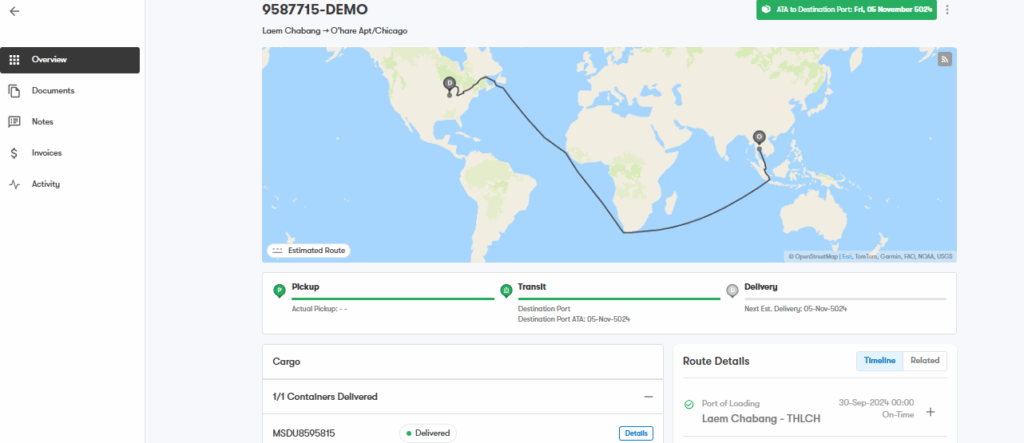
Get unparalleled visibility and control over your export shipments with Shapiro 360°. Streamline HTS classification, forecast duty rates, access every shipment document in one place, and know exactly where your cargo stands — 24/7, without picking up the phone. Bookings, documentation status, milestones, and exceptions live in a single dashboard, with data-driven insights that surface cost and timing patterns across your whole export program, not just one shipment.
Key Benefits of Our Export Freight Services
Lower Transportation Costs
Through route optimization, consolidation, and rate management that actually gets used.
Expanded Global Reach
Access to trade lanes and markets a single-carrier setup simply can’t cover.
Improved Transit Reliability
Fewer surprises from routing hiccups and carrier gaps.
Compliance Confidence
Documentation handled by people who read the Tariff Act for fun.
End-to-End Visibility
Every leg tracked in one place via Shapiro 360° — no chasing status updates.
Frequently Asked Questions
Export freight shipping is the process of moving goods from a domestic origin to an international destination — by air, ocean, rail, or truck — while managing customs documentation, regulatory compliance, and carrier coordination along the way.
Most export shipments require a commercial invoice, packing list, and bill of lading, along with any export declarations, licenses, or certificates of origin specific to the commodity and destination country.
Transit time depends on origin, destination, and mode. Ocean freight generally takes several weeks; air freight typically moves in a matter of days. Customs processing at origin and destination can add time on either end.
The biggest levers are route optimization, carrier and rate selection, consolidation (LCL or air consolidation), and mode-shifting between air and ocean based on how much time pressure a shipment actually has.
A freight forwarder coordinates the movement of export cargo: booking carrier space, consolidating shipments, preparing documentation, and managing handoffs between origin, carriers, and destination agents.
There isn’t one best mode. Ocean freight favors cost and volume, air freight favors speed, and rail or truck often make sense for regional lanes. The right choice depends on your cargo, timeline, and budget.
Get Reliable Export
Freight Solutions Today
Tell us what’s moving and where it’s headed — we’ll chart the rest. An export specialist will follow up with routing options, documentation guidance, and a straight quote. No fine print, no runaround.
