
Something Wicked This Way Ships: The Global Supply Chain Behind Halloween Candy
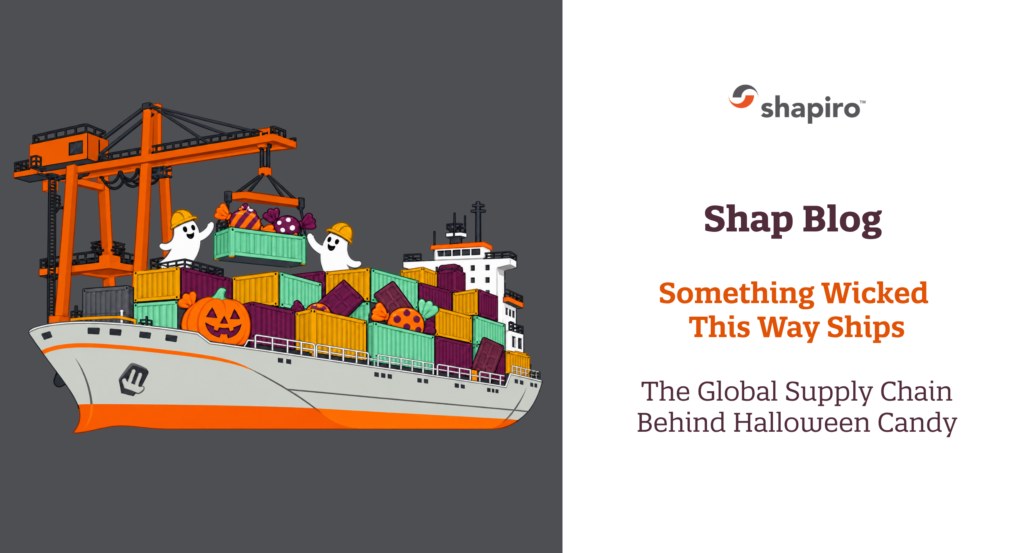
Every Halloween, millions of tiny customers arrive without appointments, disregard normal receiving hours and demand immediate delivery. Their procurement strategy is aggressive. Their costumes are occasionally inflatable. Their tolerance for an empty candy bowl is nonexistent.
Fortunately, an entire supply chain has been preparing for their arrival.
Long before the first doorbell rings, Halloween candy depends on a carefully timed procession of growers, ingredient processors, packaging suppliers, manufacturers, carriers and distribution centers. The finished product may be fun-sized. The coordination behind it is anything but.
And lately, the scariest thing in the Halloween aisle isn’t the animatronic skeleton. It’s the price of the bag underneath it. Somewhere between buying the candy and promising yourself you won’t eat it before October 31, handing out full-size bars has started to feel like a declaration of generational wealth.
The sticker shock has substance. The Bureau of Labor Statistics reports that candy and chewing gum prices rose 7.7% in September 2026 compared with a year earlier. That measures the broader category, rather than Halloween assortments specifically, but it gives the checkout horror story some statistical backing.
Before we blame a tiny chocolate bar for its financial ambitions, consider its itinerary. Getting that treat into your shopping cart requires ingredients, packaging, production and transportation to come together around a selling window that a missed vessel connection cannot extend.
Every Treat Has an Origin Story
A chocolate treat can begin with cocoa grown in West Africa, including Côte d’Ivoire and Ghana. After harvesting, cocoa goes through fermentation and drying before further processing turns it into ingredients used in chocolate.
That journey can include an ocean crossing before the candy itself even exists. Some companies, for example, might move West African cocoa beans to Europe and ship cocoa butter from Ghana and Côte d’Ivoire in specialized liquid containers. Those are documented routes, although the itinerary behind an individual candy bar will depend on its manufacturer and sourcing arrangements.
Sugar has its own travel arrangements. U.S. supplies combine domestically grown sugar beets and sugarcane with imports, most of which arrive as raw cane sugar. Depending on the recipe, milk, peanuts and corn sweeteners join the cast.
Then come the wrappers, printed bags and shipping cartons. These materials need their own purchasing schedules, production capacity and delivery plans. Ingredients arriving on time solve only part of the puzzle if the packaging is still waiting for a truck.
A factory with chocolate but no wrappers has an excellent employee break room and a fulfillment problem.
For seasonal products, those dependencies deserve as much attention as the finished goods. A missing carton or delayed wrapper can threaten the same retail deadline as a missing ingredient, even if it makes a less dramatic headline.
The Halloween Plot Starts Thickening in July
In September 2025, Hershey said it had finished building its 2026 Halloween program and was already considering 2027 and 2028. Its August 2026 update described Reese’s Pumpkins reaching shelves in July, followed by different buying occasions through October.
That planning horizon reflects how much has to happen before a shopper can casually toss a bag into the cart. Manufacturers must coordinate ingredient purchases, packaging orders, production runs and retailer requirements. Chocolate must be processed, shaped, cooled and packed. Assortment bags add another coordination challenge because several products need to be available together.
The consumer sees a cheerful bag of miniature bars. The planner sees several opportunities for one missing item to hold the whole party hostage.
Earlier retail displays also mean that October 31 cannot be the only date on the logistics calendar. A shipment intended for a summer launch has a different commercial deadline from inventory reserved for October replenishment.
For shippers, the useful question is therefore more specific than “Will it arrive before Halloween?” It is “Will it arrive in time for the customer’s receiving deadline, display launch and replenishment plan?”
The calendar may say July, but the purchase order is already wearing a costume.
Ports, Pallets and Things That Melt in Transit
There is no single arrival month for all Halloween candy. Ingredients and finished sweets follow different schedules, and candy is sold throughout the year.
S&P Global’s 2024 analysis placed the broader Halloween merchandise seaborne import peak between May and August. It also specifically noted that candy supply chains are less seasonal and less dependent on global trade in finished products. Costume and decoration trends provide context, but they cannot supply a candy-specific forecast.
For imported sweets, the journey continues through border clearance and inland delivery. Domestic production enters the network from factories. Warehouses and distribution centers receive inventory, assemble store orders and dispatch deliveries for seasonal displays and replenishment.
Each handoff needs to support the next one. A vessel arrival is one milestone; having inventory available for a retailer’s order is another. Unloading, clearance, transportation and receiving still need room on the schedule.
Temperature matters along the way, too. Excessive heat can melt chocolate, and temperature fluctuations can affect its quality. Packaging and transportation arrangements should suit the product, route and expected conditions; candy shipments do not all require identical protection.
That makes handling instructions part of the transportation plan, rather than something to consider after a hot trailer has become a very expensive fondue pot.
A pumpkin-shaped chocolate arriving as an abstract puddle is a handling issue, however artistic the result.
The Real Monsters Have Purchase Orders
The most consequential supply chain scares rarely announce themselves with thunder and a pipe organ.
A poor harvest can squeeze ingredient availability. A late packaging delivery can interrupt production. Storms, missed sailings, port congestion or incomplete import documentation can consume the time reserved for warehousing and retail delivery.
These are potential failure points, rather than a claim that each one is disrupting this year’s candy supply. Their significance comes from how easily a delay at one stage can narrow the options available at the next.
The commercial problem is the calendar. A delayed shipment of generic sweets may still find buyers. A delayed shipment in Halloween packaging risks arriving as retailers begin clearing seasonal shelves. November 1 is an unforgiving customer.
Prices have a more complicated cast of characters, too. Ingredients, packaging, labor, energy, freight and commercial pricing decisions all enter the equation. A change in one input does not explain every movement in the retail price.
Hershey’s second-quarter 2026 results illustrate that distinction: the company reported lower net commodity costs alongside higher net pricing and higher logistics expenses compared with the prior-year quarter. Those results do not explain every brand’s shelf price, but they show why an expensive bag cannot automatically be attributed to cocoa becoming more expensive at that moment.
For importers, the practical response is to examine the full order: what must arrive, which inputs it depends on, how it needs to travel and when the customer actually needs it.
Keep the Scares Out of Your Supply Chain
The Halloween candy supply chain offers a familiar lesson in a particularly festive wrapper: a successful delivery begins long before the shipment is ready to move.
For seasonal importers, that means working backward from the selling window. Confirm the customer’s required delivery date, account for the steps between arrival and availability, and build purchasing and production schedules around those requirements.
It also means asking a few unglamorous questions before the situation becomes genuinely frightening:
- Are the ingredients, packaging and finished goods working toward the same schedule?
- Have handling requirements been communicated across the route?
- Is the import documentation ready for review before arrival?
- Which delay would put the selling window at risk, and when would the team need to act?
These questions will never compete with a twelve-foot skeleton for curb appeal. They can, however, help keep a manageable delay from becoming a seasonal write-off.
At Shapiro, we know a seasonal shipment carries more than merchandise. It carries a customer commitment, a retail opportunity and a deadline with very little sense of humor. Coordinating freight and customs requirements early gives those commitments a better chance of reaching the shelf on schedule.
Have a seasonal shipping deadline lurking on your calendar? Talk to Shapiro about your freight and customs needs before the clock gets scary. Leave the jump scares to the front porch. Your supply chain has enough moving parts without a surprise ending.
And the trick-or-treaters? They can negotiate their own delivery terms: ring the bell, present the bag and demand immediate release of the cargo.
Mark Cooper says:
Very timely and on point as always however you did not mention the gremlins disguised as FDA inspectors may take a seasonal liking to chocolate and I have never known of a fully possessed Ag troll be satisfied with the best of roasted peanuts. ’tis truly a scary season!!