Featured Headlines:
Shipping Swears This Isn't "Just a Phase"
Will EU Tariffs Be Seeing Fireworks by the Fourth of July?
From Snake Charmers to Supply Chain Armers
Three Domestic Stories Walk into a Bar
The Nuclear Option
- Floating Merch Meets Chernobyl Smirch
- Commercial shipping currently powers globalization using fuel best described as “refinery leftovers stirred with atmospheric vandalism.”
- The global fleet burns hundreds of millions of tons of bunker fuel annually—thick, “carbonated” sludge that makes a 1970s diesel bus look environmentally mindful.
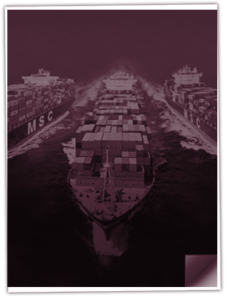
- Now, under mounting climate pressure, the industry is reconsidering an idea that sounds either visionary or deeply alarming: nuclear-powered containerships. (Did you say nuclear?!)
- Atoms for Peace Meets Bankruptcy Lease
- America launched the NS Savannah in 1959 under Eisenhower’s wildly optimistic “Atoms for Peace” initiative. It took a lot for Ike to get “wild” ever!
- It was sleek, futuristic, and as economically practical as a gold-plated forklift. Thus, only four civilian nuclear merchant ships were ever built… globally.
- Then came Three Mile Island, Chernobyl, and Fukushima Daiichi.
- Collectively, those disasters did for nuclear branding what the Fyre Festival did for influencer credibility. (Caribbean Coachella, we swear!)
- Carbon Math Meets Shareholder Wrath
- Shipping now faces a brutal triple crown math problem: move more cargo; emit less carbon; and somehow do not bankrupt everyone.
- Enter Small Modular Reactors (SMRs), now being explored by the US Maritime Administration under a Trump-backed push to revitalize American shipbuilding.
- The sales pitch is seductive: a containership operating for years without refueling; virtually zero carbon emissions; no sulfur pollution; no scrambling for fuel infrastructure halfway across the globe.
- AMR Afloat Meets Climate Vote
- Of course, there are some… “branding” challenges. Maritime insurers are loath to insure floating nuclear reactors packed with Temu merchandise and inflatable Christmas decorations! This time, they may “actuarially” need therapy!
- And ports would need new regulations, new emergency-response systems, and profoundly persuasive PR teams!
- Humanity may soon decide that splitting atoms in the middle of the ocean is somehow the safest, cleanest, and least ridiculous option available.
- Which is either a remarkable technological breakthrough… or the most nuclear reaction imaginable.
Bridge Over Troubled Wiring
- Singapore-based ship manager Synergy Marine would very much like everyone to remember that the Dali maintained an excellent safety record in the United States. Which is a bit like bragging about perfect attendance while actively standing in the principal’s office explaining why the gym is on fire.
- Federal prosecutors this week filed criminal charges against Synergy and technical superintendent Radhakrishnan Karthik Nair tied to the March 2024 collapse of Baltimore’s Francis Scott Key Bridge, which killed six construction workers.
- Prosecutors allege the crew experienced two electrical blackouts while still in port the day before departure, used the wrong fuel pump, failed to notify the Coast Guard, and later provided misleading information during portions of the NTSB investigation. They left out the fact that Synergy representatives’ noses grew three-fold during testimony!
- In other words, investigators believe this was not one catastrophic moment out of nowhere—it was a chain reaction of small decisions that kept stacking together like the world’s least inspiring team-building exercise.
- Synergy strongly disputes the allegations, calling the charges “baseless” and continuing to point (with the world’s longest nose) toward a loose wire as the underlying cause.
- The company also says it intends to prevail at trial—a confident stance for an organization that has already agreed to roughly $2.25 billion in settlements while the bridge replacement itself is expected to cost approximately $5.2 billion. (Good luck getting Trump funding, Maryland!)
- The broader takeaway here is not that safety records are meaningless. They matter enormously. But in shipping, reputations are often built over thousands of uneventful voyages… and destroyed by the one “loose wire” nobody escalated because “it’ll probably be fine.”
- Maritime disasters rarely come from one giant dramatic failure. More often, they come from a series of smaller warnings quietly getting promoted from “maintenance issue” to “federal exhibit.”
- Straight A’s… right up until the final exam.
Shipping Swears This Isn't "Just a Phase"
- Danish Ship Finance released its May 2026 Shipping Market Review this week, and the industry takeaway was essentially: this is who I am now, Mom.
- The report argues shipping is moving away from its traditional boom-and-bust cycles and into something more structural, where geopolitics, decarbonization, sanctions, deglobalization, and aging fleets are all reshaping the market simultaneously.
- Which, to be fair, is also exactly what every shipping cycle says right before the next cycle kicks open the front door wearing sunglasses and demanding $20,000 per container again.
- So naturally, let’s process this the “healthy” way: through a family counseling session.
- Therapist: “So how are we feeling today, Shipping?”
- Container Shipping: “Angsty.”
- Tankers: “I’m totally thriving and way popular actually.”
- Tankers continue benefiting from sanctions-driven trade shifts and longer voyage patterns that keep tonnage tied up and rates elevated. Basically, the one sibling quietly making money while the rest of the family argues in the kitchen
- Container Shipping: “I mean… actually, I’m actually like fine actually.”
- Container carriers are staring at a massive orderbook, possible Red Sea normalization, and forecasts for softer rates into 2027. Fine, our patoots!
- But they’ve also become remarkably skilled at blank sailing tantrums and capacity management pouts anytime profitability starts feeling emotionally threatened.
- LNG Shipping: “I don’t even like know who I am anymore.”
- LNG shipping is deep into an existential crisis while the industry debates future fuels (and fuel futures), engine technology, and what “green shipping” is actually supposed to mean.
- Shipowners: “We’re just exploring our options and finding ourselves right now.”
- New vessel ordering remains cautious as shipyards stay packed, newbuild prices remain painful.
- At the risk of gathering scorn from our children, we seriously doubt this isn’t just a phase!
Lawyer Up, Section 122!
- The U.S. Court of International Trade (CIT) issued a split 2–1 TKO decision on May 7 finding the Section 122 tariffs unlawful in Burlap and Barrel, Inc. v. Trump.
- Before anyone starts deleting tariff lines out of spreadsheets like they’re spring-cleaning old emails, there’s an important catch buried in the legal fine print.
- The ruling currently applies only to the plaintiffs involved in the filed lawsuit. For everyone else, Section 122 duties remain fully in effect for now.
- Translation: this was a meaningful courtroom win… not a nationwide tariff garage sale.
- Importers should continue paying Section 122 duties unless they are specifically covered under the litigation. CBP procedures and collection requirements have not broadly changed at this stage.
- The government is also expected to appeal, meaning this ruling is likely less “final destination” and more “previously on Tariff Litigation: Season 7.”
- In other words, the court may have tapped the brakes, but the tariff truck is still very much barreling down the interstate with the check-engine light on.
- The case also highlights just how fragmented the current trade environment has become: different tariff authorities, different lawsuits, different rulings, and increasingly different outcomes depending on who actually filed suit first.
- For now, the practical takeaway is simple: watch carefully, document everything, and do not assume your duty obligations magically disappeared overnight because somebody else won a fight in court after round one.
- And as the legal road signs continue changing at highway speed, our compliance team is tracking every turn, appeal, detour, and occasional pothole along the way. Be sure to check out our Latest Tariff Updates page to stay in the loop.
Will EU Tariffs Be Seeing Fireworks by the Fourth of July?
- The latest U.S.–EU tariff conversation is arriving just in time for summer vacation season: loud, dramatic, vaguely threatening, and likely to make somebody’s budget cry.
- In a recent social media post, President Trump warned tariffs on European Union imports could “immediately jump to much higher levels” if the EU does not reduce its tariffs to zero by July 4.
- Because apparently nothing says “celebrating independence” quite like aggressively renegotiating transatlantic trade policies over potato salad and fireworks.
- The post also referenced the previously announced Turnberry trade agreement framework, with the administration signaling frustration over what it views as delayed follow-through (and full obedience) from the EU side.
- Earlier statements from the president also floated possible tariff increases on automobiles manufactured in and imported from the European Union, including discussion around a 25% tariff level. In related news, BMW and Mercedes feel even more luxurious! Ooo la la!
- So far, none of the proposed increases have officially taken effect, and many industry watchers increasingly believe implementation could slide closer toward the July 4 benchmark itself. Hey, at least broader prices for fuel, groceries, labor, and everything else are WAY DOWN! Why not greatly increase the consumer cost of imports from Europe, right?!
- For now, this remains more “warning shot across the bow” than full fireworks finale—but importers with EU exposure should still avoid treating this like background noise.
- Between ongoing negotiations, shifting timelines, and the administration’s continued enthusiasm for last-minute policy pivots, nothing feels fully locked in right now except for uncertainty itself.
- Bottom line: enjoy the cookouts, watch the fireworks, and maybe keep one eye on your EU sourcing strategy while you’re lighting sparklers.
From Snake Charmers to Supply Chain Armers
- For years, much of global logistics has looked at India and saw one thing: a sourcing market. Cheap manufacturing in, finished goods out, next slide please.
- Then India disappeared for a bit, worked on itself, invested heavily in infrastructure, and has now re-entered the global logistics group chat conversation looking suspiciously tasteful, well-rested and financially responsible.
- This is less “glow up” and more full Bollywood transformation montage.
- Warehousing has leveled up dramatically, with Grade A facilities, automated fulfillment centers, and expanding logistics parks reshaping major distribution corridors.
- Dedicated freight rail projects are moving cargo faster. Ports are becoming more efficient. Airports are expanding cargo capacity. And Customs digitization is finally making cross-border paperwork feel slightly less like a treasure hunt designed by a fax (and tax) machine.
- Honestly, the entire logistics network feels a bit like India’s festival culture right now: loud, colorful, crowded, energetic… but somehow increasingly coordinated underneath the chaos.
- Meanwhile, India’s direct-to-consumer export market is quietly becoming a serious force.
- Small and medium-sized businesses that once sold only domestically are now shipping parcels into North America, Europe, and the Middle East through global marketplace platforms like they’ve been running international fulfillment operations since birth.
- And unlike some emerging fulfillment markets that spend years trying to build parcel density, India already had the scale. The demand was always there. The infrastructure just finally showed up wearing proper shoes.
- Even the old stereotypes are getting rewritten. Global supply chains once treated India like the snake charmer at the edge of the sourcing conference—interesting, colorful, maybe slightly unpredictable and eccentric.
- Now India is increasingly the one running the stage production, managing the ticket sales, optimizing the supply chain behind the curtain, and probably building the app everyone else forgot they needed.
- Which is why logistics operators are starting to view India differently too—not simply as a place to manufacture products, but increasingly as a place to store, sort, fulfill, and distribute them globally.
- In other words, India didn’t just change outfits. It changed roles.
- Bottom line: the “cheap sourcing hub” narrative is aging fast. India’s fulfillment and logistics capabilities are evolving into something much broader—and global supply chains are finally starting to Namaste and pay attention.
Three Domestic Stories Walk into a Bar
- Some weeks in domestic freight feel interconnected. This week feels more like three completely separate problems all accidentally got booked into the same therapy appointment.
- The Southern California Chassis Pool Is Quietly Evaporating
- The Pool of Pools chassis cooperative—launched in 2015 with roughly 80,000 units and very ambitious dreams of making Southern California freight move slightly less like a parking-lot-themed escape room—is nearing the end of the road.
- TRAC Intermodal announced it will exit the pool on June 1, following Flexi-Van’s earlier departure and leaving DCLI as the final major participant standing in what increasingly resembles the last scene of a post-apocalyptic Godzilla movie.
- What was once a massive shared-equipment system has now shrunk to roughly 25,000 chassis and the emotional energy of a group project where everyone quietly stopped replying to the emails.
- Over time, many trucking operators simply decided they would rather control their own equipment than rely on a shared pool model. Isn’t California a socialist country, y’all?!
- Bottom line: one of the industry’s biggest congestion-era collaboration experiments is quietly dissolving in real time—like a logistics version of a band announcing they’re “taking an indefinite hiatus.” Or, maybe like the globe’s eldest form of government… ah, never mind!
- Diesel Prices Have Officially Moved In
- Diesel prices have remained above $5 per gallon, nationally, since March 16, climbing sharply from roughly the $3.80 range before the latest geopolitical disruptions rattled energy markets (yet again).
- At this point, diesel is no longer a temporary guest. Diesel has a toothbrush in the bathroom and opinions about your thermostat settings.
- Those fuel costs continue flowing through trucking, rail, and intermodal pricing structures via fuel surcharges and tighter operating margins.
- Analysts still see limited near-term relief, meaning elevated transportation costs may remain part of the domestic freight landscape for a while.
- Bottom line: the fuel surcharge line item has officially been promoted from recurring guest star to full-time cast member.
- The Trucking Registry Is Finally Checking IDs at the Door
- On May 14, the Department of Transportation officially replaced its carrier registration platform with a new system called Motus.
- The biggest upgrade is surprisingly straightforward: identity verification. Revolutionary concept, honestly.
- The platform is designed to crack down on so-called “chameleon carriers,” operators that repeatedly shut down and reopen under new names to avoid enforcement actions or penalties.
- For the first time, both businesses and individuals registering in the system will undergo identity validation through providers including IDEMIA and CLEAR.
- Which means the trucking registry may now have stricter entry requirements than some airport terminals and at least three hundred nightclubs in Miami.
- Bottom line: the industry is moving toward tighter oversight, more verification, and fewer opportunities to disappear, repaint the logo, add “Solutions” to the company name, and pretend none of this happened.