Featured Headlines:
From War Risk to Rate Risk, Follow the Fuel
TPM26: Hot Air, Cold Brew, and Just-Right Chaos
The CIT-uation Room: Temper Your Enthusiasm
A Dire Strait: Hormuz Shocks Air, Ocean, Oil Cargo Flows
Truckers, Bottlenecks & Beltway Tweaks
From War Risk to Rate Risk, Follow the Fuel
- Ocean carriers are once again reaching for the surcharge playbook—this time with geopolitical receipts. As conflict involving Iran escalates, the shipping industry is staring at a perfect storm of real cost pressures… and opportunistic pricing.
- Start with the hard data. Tanker flows through the Strait of Hormuz—which handles ~25% of global seaborne oil and ~20% of LNG—have come to a standstill. Roughly 18 million barrels/day are disrupted. Brent crude has already pushed past $80, with credible forecasts north of $100 if the situation drags. Translation: bunker costs are rising fast!
- Brent crude is named after an oilfield in The North Sea that was in turn named after a goose by Shell Oil in 1971. Though the oilfield no longer produces, it still serves to name the global benchmark for oil prices. What???!!!
- Back here on Earth, ocean carriers aren’t waiting for any geese to migrate!
- Emergency/Middle East surcharges: Already rolling out, with some lines quoting triple-digit USD per TEU.
- War risk surcharges: Applied broadly across Persian Gulf routings.
- BAF/OBS increases: Q2 2026 adjustments incoming, with quarterly resets locking in volatility. O.N.E. went first; don’t they always go first?!
- EU emissions surcharges (ETS/FuelEU): Now covering 100% of emissions, structurally raising baseline costs—conflict or not.
- There is real pain here. Rerouting via the Cape of Good Hope adds 10–14 days, burns more fuel, and ties up capacity. Meanwhile, attacks on energy infrastructure—from Saudi refining to Qatari LNG—are pushing diesel and marine fuel prices higher across the board.
- But here’s the industry side-eye: not every surcharge maps cleanly to incremental cost. History (pandemic era, Red Sea diversions) suggests a familiar pattern—cost spikes justify fees, fees outlive the crisis.
- So yes, fuel is up. Risk is real. But shippers should scrutinize the math. Because in container shipping, “emergency” has a habit of becoming permanent—one line item at a time.
TPM26: Hot Air, Cold Brew, and Just-Right Chaos
- Ah yesss, the annual pilgrimage to the TPM Conference—where 10,000 supply chain professionals gather in Long Beach to solve global trade… primarily over many, many cocktails in what amounts to one ginormous hot-air balloon!
- (Hey, I couldn’t make it this year, so I’m just jealous!)
- The good vibrations this year? Imagine a room full of ocean carrier reps who walked in “scared to death” and, somewhere between the second espresso and third IPA, realized that SCOTUS and Iran may just be “conspiring” to make sure that “every little thing gonna be alright.” Thanks to Bob Marley from the grave for that quote!
- Day 1 opens with the traditional rituals: Chest-bumping carrier sales reps. Three-minute “let’s circle back” coffee meetings. And enough networking to make LinkedIn blush. By noon, we’re all experts again—on tariffs, AI, nearshoring, and whether that fourth drink counts as “hydration.”
- Then come the panels. Carrier executives take the stage to explain—bravely—how difficult things are. There is much hand wringing. Much sighing. Much discussion of “unprecedented challenges.” Curiously, this always precedes a slide on… new surcharges. (Well, it does!)
- Meanwhile, the real world barges in. Tensions around Strait of Hormuz disruptions dominate hallway chatter. Oil spikes, LNG flows wobble, and suddenly every carrier remembers the handy phrase “emergency fuel surcharge.”
- And tariffs? Oh, tariffs are the Belle of the ball. With U.S. import duties hovering north of 17%, and whispers that 10% from China is now considered a bargain, importers are quietly asking: “Do we ship now… before this gets bad again?”
- Spoiler: Yes. Yes, they do!
- Back in the ballroom, AI companies are having their moment. Some are solving real problems. Others are… inventing new ones. We are promised visibility, optimization, and possibly enlightenment. Also, there is extreme and devastating existential dread! (Relax—a robot is not taking your job. Yet.)
- Contract negotiations hum in the background like elevator music. Everyone is talking. No one is singing. It’s a beautiful dance—equal parts strategy, theater, and hostage negotiation. This year, it is also all about running out the clock for the carriers!
- And let’s not forget the subplots: union labor tensions, overcapacity debates (11 million TEU on order!), and the ever-present hope that this year—this year—we’ll finally “take costs out and put value in.”
- By Day 3, voices are hoarse, inboxes are full, and everyone has exactly 47 new “close connections.” The conclusions?
- Fuel will be higher. Surcharges will multiply. Contracts will… continue being discussed.
- And TPM will remain what it has always been: Part marketplace, part therapy session, part open bar—with just enough useful information to justify the badge.
- See you next year. Drinks at 4. Negotiations at… some point.
- Want the inside scoop? Just send us a message at [email protected] to get connected.
The CIT-uation Room: Temper Your Enthusiasm
- Yesterday (3/4/26), importers received a meaningful—though incomplete—win in the ongoing IEEPA tariff litigation. Judge Eaton of the U.S. Court of International Trade (CIT) ruled the tariffs were void ab initio (ab-ih-NISH-ee-oh), meaning unlawful from the start. Translation: the court just uncorked a major tariff policy (and ab-ih-NISH-ee-oh was his name-o!).
- Before anyone starts organizing a refund parade, a few caveats.
- Judge Eaton ordered that:
- Unliquidated entries (most recent imports) must be refunded.
- Entries not finally liquidated—generally those liquidated within the last 90 days—must also be refunded.
- Interest must be paid on those refunds.
- The thorniest issue—refunds for importers who were not CIT litigants—will be addressed during a non-public conference on March 6.
- That last bullet is either a silver bullet or a deadly stray.
- If refunds ultimately hinge on whether an importer actually filed suit at the CIT, the implications are enormous.
- A policy that effectively says “we want to be fair to importers and consumers… but only the ones who sued us” would be, let’s say, legally and politically awkward.
- The mechanics remain murky. The order suggests refunds may not require individual litigation or protests, but implementation will ultimately depend on how U.S. Customs and Border Protection (CBP) programs the ruling—and what appellate courts decide next.
- And yes, a DOJ appeal is almost certain.
- Expect the administration to:
- Appeal immediately to the U.S. Court of Appeals for the Federal Circuit. The government already requested a stay during the hearing; Judge Eaton “blocked that shot.”
- Slow-roll compliance. With roughly 71 million affected entries, programming refunds will not happen overnight.
- Narrow eligibility. Department of Justice attorneys made clear they do not believe all importers are entitled to refunds—especially those who never filed suit.
- In other words: this ruling is huge, but it is also page one of a long appellate fight.
- For importers, the practical advice is simple: temper expectations and protect your position. Open questions remain around drawback, FTZ treatment, and—most immediately—whether the Federal Circuit grants a stay.
- If a stay is issued, refunds pause while the appeal unfolds.
- Which is why many compliance teams are quietly asking the same question: Should we be filing at the CIT right now?
- One housekeeping reminder: make sure your ACE account is set up to receive electronic refunds. When money starts moving, it will move digitally.
- Our tariff and compliance team is tracking this ruling about as close to 24/7 as humans reasonably can, and we’ll continue sharing updates as the next puzzle pieces fall into place.
- For now, the best advice may be simple: Keep Calm… and Eaton On!
A Dire Strait: Hormuz Shocks Air, Ocean, Oil Cargo Flows
- When the Strait of Hormuz effectively shut down, the immediate focus was oil. But the operational shockwaves across global logistics—especially airfreight—may prove just as disruptive.
- As we said in our opener, roughly 25% of global seaborne oil and 20% of LNG normally move through the strait. After the latest escalation involving Iran, tanker traffic collapsed from about 24 daily transits to just four, most of them Iranian-flagged.
- Around 200 tankers are now stuck inside the Gulf.
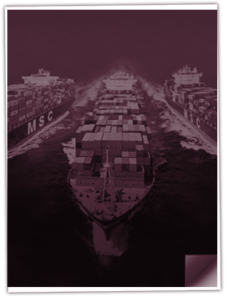
- Container shipping isn’t immune either. Roughly 170 containerships carrying about 450,000 TEU remain trapped inside the strait, while broader re-routing and delays are affecting nearly 10% of the global container fleet.
- War-risk insurance responded instantly, jumping from 0.2% to roughly 1% of vessel value per voyage in less than 48 hours.
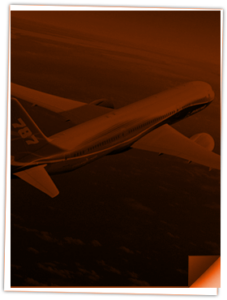
- But the most immediate operational shock is happening in the air.
- Several major cargo networks abruptly curtailed operations across the region. FedEx suspended flights across much of the Middle East, while UPS signaled it is closely monitoring conditions.
- Major cargo hubs were also hit. Qatar Airways Cargo, Emirates SkyCargo, and Etihad Cargo—three of the world’s most important freight operators—have curtailed or suspended operations across multiple routes.
- The result: global air cargo capacity dropped roughly 18% in a single weekend, according to industry consultancy Rotate.
- Rerouted flights are now threading paths over Central Asia and Russia, burning more fuel, carrying less payload, and stretching transit times. Rates are already reacting accordingly.
- The timing could have been worse—but not by much.
- Factories in China are only beginning to ramp back up following Lunar New Year, which has temporarily softened demand. That breathing room will disappear quickly once export volumes return to normal levels.
- The Red Sea crisis forced supply chains to detour, but Hormuz is different.
- When the world’s most important energy corridor—and a major aviation crossroads—both seize up at the same time, logistics planners have one realistic assumption to work with: capacity will tighten, transit times will stretch, and surcharges will multiply.
Caught in a Guinean Guise
- In a week dominated by tariff drama and Middle East fireworks, it was oddly refreshing to see a maritime story that had nothing to do with either.
- The date was February 28. A shadow tanker was intercepted in the North Sea. And somehow… this did not become the biggest headline of the week.
- Russia’s shadow fleet had a particularly rough evening when Belgian special forces boarded the MT Ethera during Operation Blue Intruder.
- The tanker was sailing under a Guinea flag—at least on paper. Investigators quickly concluded the registry was about as authentic as a three-euro designer handbag. In reality, the vessel’s identity appears to have been little more than a convenient Guinean guise.
- The Ethera has been on the European Union sanctions list since October 2025 and the United States Department of the Treasury sanctions list since July. Apparently, the ship’s owners interpreted “sanctions” less as a restriction and more as a polite suggestion.
- Ethera is derived from the lovely word “ethereal” ironically!
- Belgian authorities seized the vessel and imposed a €10,020,000 surety, meaning the tanker will remain parked in Port of Zeebrugge until the payment is made and compliance inspections are complete.
- The crew, meanwhile, isn’t going anywhere. No one’s leaving zee brig in Zeebrugge until the bill is settled! Does a German accent even work in this story?!
- This marks the seventh Russian-linked tanker seized by NATO countries, with enforcement actions steadily increasing as Western governments try to squeeze the Kremlin’s shadow fleet.
- The stakes are not small. Roughly 30% of Russia’s federal budget still depends on oil exports, which helps explain why vessels with creative paperwork and suspicious flag registries keep appearing on maritime radar screens.
- Whether this seizure becomes a meaningful enforcement milestone—or just another matryoshka doll in the shadow fleet saga—remains to be seen.
- But for now, one thing is clear: sailing around sanctions with borrowed identities works… right up until the moment someone knocks on the hull and asks for your papers.
- And this time, the knock came from Belgium—home of waffles, chocolate, and apparently a surprisingly low tolerance for maritime cosplay.
- If Hercule Poirot were investigating, he would probably call it simple: the clues were obvious, the disguise was sloppy, and the guilty party was hiding in plain sight.
- Case closed.
Truckers, Bottlenecks & Beltway Tweaks
- Washington managed to cram a surprising number of trucking policy actions into a single week. Contractor rules, freight congestion, CDL standards—several corners of the domestic freight world lit up at once.
- Independent Contractor Rule Gets the Axe
- The U.S. Department of Labor proposed rescinding the 2024 independent contractor rule, which had tightened the criteria for classifying workers as contractors.
- The replacement framework would move closer to the 2021 standard, a shift welcomed by the American Trucking Associations, which argues the prior rule threatened the operating model of more than 350,000 owner-operators.
- For independent truckers, the announcement felt like a collective exhale.
- That said, the rule still has to run the full federal rulemaking gauntlet before anything becomes final.
- Translation: owner-operators may breathe easier—but the industry might want to hold that breath until the “new-new” rule actually lands.
- Chicago Still Wears the Crown for Freight Gridlock
- Chicago’s I-294 interchange at I-290/I-88 topped the 2026 freight bottleneck list from the American Transportation Research Institute.
- The George Washington Bridge ranked No. 2, with Atlanta’s I-285/I-85 interchange rounding out the top three. Congrats, medalists!! You’ve worked SO hard!!
- ATRI estimates delays across the worst bottlenecks equal 436,000 drivers sitting idle for an entire year.
- At that point it stops being traffic and starts looking like a nationwide parking lot. AND, at $70,000 a year per trucker, that bill is $30.5B annually or 7.26 times more than Hapag-Lloyd offered Zim!
- CDL Tests Move to English-Only Standard
- Sean Duffy, Secretary of the U.S. Department of Transportation, announced that commercial driver’s license tests must now be administered in English.
- The rationale: drivers must be able to read road signage and communicate with law enforcement.
- The move also accompanies a broader crackdown on fraudulent CDL schools and questionable licensing practices.
- Federal law has long required English proficiency for commercial drivers. The difference now is how aggressively the rule may be enforced.
- Whether testing language proves to be a major safety lever—or simply the most visible one—is something the data will eventually tell us.
- Either way, Washington clearly believes tightening the rules here is part of the fix y prospero año y felicidad.