Featured Headlines:
Hormuz Blockade, Supply Chain Cascade
Opening Day for 232 Tariffs: A New Lineup Takes the Field
Derailed, Docked & Diesel-Shocked Spring Has Sprung… Something Else Too
Hormuz Blockade, Supply Chain Cascade
- Strait Shooting
- For the umpteenth time, approximately 20% of the world’s crude oil and natural gas travel through Hormuz, roughly 800 commercial vessels (and some 50,000 containers) are stuck with traffic flowing through down almost 97% per day.
- Today, we’ll talk about the broader supply chain strain caused by block, block, blockin’ heaven’s door to Saudi Arabia, UAE, Kuwait, Qatar, Iraq, and Iran.
- From Petrochemicals to Retrochemicals?
- The petrochemical industry converts oil and natural gas into essential chemical building blocks (olefins and aromatics) used to manufacture plastics, fertilizers, synthetic fibers, rubber, and pharmaceuticals. It serves as a crucial supply chain link between oil refining and consumer goods, creating thousands of products like packaging, clothes, and automotive parts.
- Farmer Brown needs his phosphate and nitrogen fertilizers (even chemical urea, ewww!), and he needs lots of diesel for his tractor right during planting season in the Northern Hemisphere. Boom, costs are up.
- Grocer Sue has to pay Brown more green for his greens, AND she has to pay more for all of her (plastic) food packaging. Boom, prices soar.
- Budget Bobby just scratches his head when KABOOM, his food costs double.
- A Helium Premium
- It turns out helium is not just the source of hours of hilarity delivering squeaky witticisms in a very high voice… “four score and seven years ago” is always a hit! Due to its absurdly low boiling point, it is an essential coolant in the manufacturing process for semiconductors! While conducting essential etching, the need for helium is anything but “semi” —turns out chipmaking runs on more than just silicon and optimism.
- With oil wells ever-present in the Middle East, it turns out they “strike” helium too!
- The Everything Problem
- In global supply chains, nothing moves alone—and nothing breaks alone either. A blocked strait doesn’t just strand oil tankers—it strands fertilizers, plastics, semiconductors, food, and ultimately consumers.
- In a supply chain this interconnected, a disruption in one lane doesn’t stay in its lane… it merges, backs up, and eventually honks its way into everything from your grocery bill to your GPU.
Jet-Lagged Air Chains
- Airlines are still “Leaving on a Jet Plane”—just not on the routes they used to fly. Avoiding conflict zones (especially the Middle East) is forcing longer flight plans across Asia–Europe–North America corridors, driving up fuel burn, crew time, operating costs… and, crucially, John Denver references!
- Long-held airline efficiencies just wrote home and said, “don’t know when I’ll be back again.” They’re not quite “so lonesome they could die,” but getting there.
- Those higher costs aren’t staying in the cockpit—they’re being passed to shippers. Carriers are increasingly breaking out war-risk surcharges from base rates, signaling a shift toward more dynamic, transparent, AWFUL pricing.
- Even so, war-risk premiums aren’t the main act just yet. The bigger story is fuel volatility + longer routes + operational disruption, all layering together to push rates higher—more “Jet Airliner” grind than any single driver alone.
- “You know you got to go through hell before you get to heaven!”
- Capacity is quietly tightening like a hungry boa. Longer flight times reduce aircraft utilization, effectively shrinking available lift—so even without a demand surge, the market tightens…and tightens…squeezing higher prices from its prey.
- Spot vs. contract spreads are widening, especially in disruption-driven markets. Contract shippers are somewhat insulated, while spot buyers pay the “last-minute ticket” premium.
- There’s a limit to how far this can go. If costs stay elevated, lower-margin cargo starts to drop or shift to ocean—demand destruction becomes real, and not every shipment can afford a “Rocket Man” move. How long will this last?
- “And I think it’s gonna be be a long, long time,” said aviation expert Elton John.
- The data is already flashing mixed signals: global airfreight tonnage fell ~4% in March, with MESA down ~21% YoY, yet rates rose ~12% YoY—a classic supply squeeze where less cargo flies, but at higher prices.
- Fuel is becoming a headline risk. European airports warn of potential shortages if the Strait of Hormuz remains constrained, which could tighten supply and push rates even higher near term.
- On the supply side, there’s a positive: the FAA approved the first Boeing 777-200 passenger-to-freighter conversion, adding a lower-cost path to widebody capacity as airlines need lift and new builds remain expensive and delayed.
- Net/net: the market is in a “Learning to Fly” phase—more dynamic pricing, more volatility, tighter capacity, and rising cost pressures. The key question is whether demand holds—or more cargo simply doesn’t board.
- In terms of expanding rates, the market is “learning to fly, but it ain’t got wings; coming down is the hardest thing.”
Opening Day for 232 Tariffs: A New Lineup Takes the Field
- It’s the start of Q2, which in trade policy terms means one thing: new rules are stepping up to the plate—and this week, Section 232 showed up with an entirely new batting order.
- On April 2, 2026, the administration rolled out a sweeping update to steel, aluminum, and copper tariffs, alongside a separate executive order targeting pharmaceutical imports.
- The headline change? Tariffs are no longer being calculated on selectively declared metal content—they’re now being applied to the full customs value of the product.
- Translation: the strike zone just got a lot clearer.
- New Tariff Structure Steps Up to the Plate
- Products made almost entirely of steel, aluminum, or copper will now face a 50% tariff on full commercial invoice value.
- Derivative products substantially made from those metals will see a 25% tariff applied to full commercial invoice value.
- Certain industrial and electrical grid equipment will carry a 15% tariff through 2027 to support domestic buildout.
- Products made abroad using U.S.-origin metals will be subject to a reduced 10% tariff.
- Some products containing 15% or less metal content are no longer subject to Section 232 tariffs.
- The biggest shift: the prior “metal content” methodology is gone—tariffs now apply to the entire declared customs value, not just the metal portion.
- In other words: no more slicing the value to find a better pitch—everything is now in play.
- Pharmaceutical Tariffs Enter the Game Late… and Loudly
- A 100% tariff will apply to patented pharmaceutical products and ingredients.
- Timing: 120 days for large companies, 180 days for smaller companies.
- Imports from the EU, Japan, Korea, Switzerland, and Liechtenstein will instead face a 15% tariff.
- UK-origin pharmaceuticals will receive preferential treatment under a newly negotiated agreement.
- Companies that enter both MFN pricing agreements (HHS) and onshoring agreements (Commerce) can qualify for a 0% tariff through January 20, 2029.
- Companies that only commit to onshoring will face a 20% tariff.
- Translation: this isn’t just a tariff policy—it’s also an incentive playbook.
- Between full-value tariff calculations, expanded product scope, and aggressive pharmaceutical measures, this update marks a clear reset in how Section 232 is applied.
- For importers, the takeaway is straightforward:
- Recheck classifications
- Re-evaluate landed cost models
- Make sure your current strategy can still make contact
- Because in this version of the game, the rules didn’t just change—they rewrote the scoreboard.
MSC is All in the Family
- After 50+ years, Gianluigi Aponte has officially handed the keys to MSC to his kids—Diego and Alexa.
- He’s not going anywhere (Executive Chairman), but let’s be clear: this is a “your turn now” moment.
- The MSC culture has been compared to an intimate Italian restaurant for good reason. It is a family business with global scale – less “boardroom theater,” more “call Dad.”
- Through private ownership, they play the long game while remaining flat and fast!
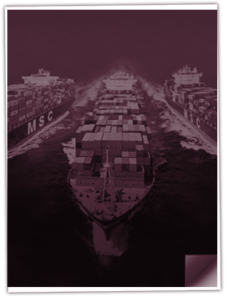
- Something is working for the #1 ocean carrier in the world.
- 7 million+ TEU – And still ordering ships like it’s a hobby.
- 900+ vessels and 20%+ market share – At some point it stops being a fleet and becomes a navy.
- If Mr. Joel wrote a song about MSC, it would be called Scenes from a Swiss-Italian Shipping Empire. Here goes!
A vessel of steel, a vessel of scale,
Perhaps one more order without fail,
We’ll take a route across the seas,
In our Swiss-Italian fleet—
Where the family still runs the street.
A flagship here, a megaship there,
It all depends on who will dare,
They’ll meet demand at every jam,
In their global shipping fam.
Started small in ’70 days,
One ship and a different way,
No grand design, no flashy plan—
Just a captain who understood the span.
Now Diego and Alexa take the lead,
Same instincts, same kind of speed,
From the Med to every trade lane chart,
Still a family at the heart.
- Bottom line: MSC isn’t just the biggest—it might be the most unusual success story in global shipping: family-run, low-profile, and somehow playing a completely different game than everyone else.
Derailed, Docked & Diesel-Shocked Spring Has Sprung… Something Else Too
- If spring is supposed to be a season of renewal, domestic freight seems to have interpreted that as “let’s try everything at once and see what breaks.”
- The Railroad Wedding Nobody Asked For
- UP and NS are back, once again pitching their merger as a cross-country love story instead of what regulators previously labeled… incomplete.
- After getting that January reality check, the pair is reworking their proposal ahead of an April 30 refiling deadline.
- The storyline hasn’t changed much: fewer trucks, more rail efficiency, better competition.
- The audience hasn’t either: skeptical, and not exactly throwing rice.
- Call it a merger if you want—but until regulators say “I do,” this one’s still stuck in engagement limbo.
- Norfolk Southern Claims the Home Field Advantage
- In a decision years in the making, the Surface Transportation Board officially handed Norfolk Southern control of the preferred terminal at the Port of Virginia.
- CSX, which had been working around the arrangement, is now formally on the outside looking in.
- Regulators noted the workaround was already being subsidized—and the port itself was quietly steering CSX traffic elsewhere anyway.
- So now it’s official: same setup, just with paperwork to match.
- Not exactly a shock ending—more like the result everyone saw coming, finally going final.
- California’s Late Arrival to the Party
- While much of the country spent winter battling storms and tightening capacity, California trucking stayed… oddly calm.
- Then February ended, fuel spiked roughly $1.50 per gallon, and the calm disappeared just as quickly.
- National dry van rates climbed to $2.04/mile (up 24% YoY), while flatbed hit $2.55/mile, a four-year high.
- In other words: California didn’t skip the cycle — it just showed up late.
- The Midwest called… and this time, California had no choice but to answer.
- Congress Discovers Cargo Theft (Everyone Else Already Did)
- A bipartisan bill targeting organized cargo theft is gaining traction — which, in today’s environment, is noteworthy all by itself.
- The American Transportation Research Institute estimates theft is costing the industry $18 million per day, a number that tends to get attention.
- The proposed legislation would improve coordination between federal agencies to better track and dismantle organized theft networks.
- Timing matters here: with election season approaching, the window to act may be shorter than it looks.
- Cargo theft may be old news on the ground—but in Washington, it’s suddenly a fresh discovery.
- Put it all together, and domestic freight isn’t easing into Q2—it’s getting pulled in four directions at once.
- Rail consolidation, port positioning, fuel shocks, and security risks are all moving at the same time… and not necessarily in the same direction.
- Spring may be about new beginnings—but for domestic freight, it’s looking more like a system-wide wake-up call.