Featured Headlines:
Suez: Open for Business, Closed for Comfort
Tariff-Raff: A Fast-Talking Roundup of January’s Trade Shifts
EPA Is Bugging Out at the Border Over Illegal Imports
Cleared Under Shared Colors: US Expands ITAR Exemption for Trusted Allies
Tight Skies, Flat Rates — A U.S. Air Cargo Reality Check
From the Yard to the Courts: A Rough Week for Domestic Freight
Suez: Open for Business, Closed for Comfort
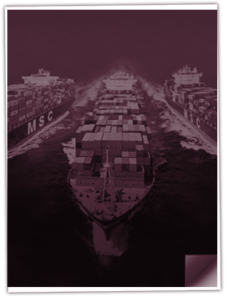
- The Red Sea looks calm again—blue skies, smooth water, but lots of red flags. Geopolitical, military, and commercial risks still swirl just below the surface, leaving carriers to debate whether the Suez is a shortcut…or a shortcut to trouble.
Houthis: Yellow Light, Finger on the Trigger
- Houthi attacks are down sharply since the October Gaza ceasefire—off about 84% year-over-year—but this is a pause, not a peace.
- Some carriers are tiptoeing back into Suez, yet insurers and security teams are still firmly seeing red.
- UN sanctions remain, U.S. strikes continue, and yet Houthi leaders have made it clear: Israeli-linked shipping stays in the red bull’s eye.
- Bottom line: no shots fired, but the safety’s off.
Israel: Waving the Red Cape
- Israel remains the region’s most reliable accelerant.
- The ceasefire is holding—barely—but violations, West Bank operations, and unresolved Hamas issues mean one wrong move could restart the whole show.
- For shipping, it’s about optics. ZIM’s Israeli identity keeps premiums high and routing cautious, even as others test the waters.
- Flags, ownership, and trading history still matter—and can turn any hull into a red flag.
Iran: The Permanent Red Marker
- Iran is the constant no one can ignore.
- From Hormuz to Bab el-Mandeb to the grand Suez, Tehran’s ability to disrupt shipping—directly or by proxy—keeps underwriters permanently on edge.
- You don’t need a blockade to create red ink. A little uncertainty does the job just fine.
Egypt: Rolling Out the Red Carpet…Carefully
- Cairo is eager, realistic, and nervous.
- Security coordination is improving, transit numbers are ticking up, but revenues are still well below normal.
- Suez is a national priority—but Egypt knows it can’t control the region’s mood swings.
Ocean Carriers: Red-Handed Hedging!
- Everyone’s testing. No one’s committing.
- Maersk: Carefully back into the Suez (MECL), confidence with an asterisk.
- CMA CGM: Back around the Cape—calling chaos an “uncertain international context.” Très français.
- MSC: Splitting routes, hedging every voyage.
- Hapag-Lloyd and ONE: Playing it safe and sleeping better.
- COSCO: Increasing exposure quietly, saying very little.
- ZIM: Still the most geopolitically visible—and vulnerable.
Bottom Line: Still Seeing Red
- The calm is real—but conditional.
- The Suez isn’t closed, just expensive in all the wrong ways.
- For now, carriers hedge their bets, watching fuel prices and transits with one eye and geopolitics with the other—fully aware that in the Red Sea, today’s pause can become tomorrow’s poison.
- Are you seeing red instead of green on your bottom line? Reach out to Shapiro’s Freight Experts to discuss your options today!
Tariff-Raff: A Fast-Talking Roundup of January’s Trade Shifts
- Greenland Tariff Threats Thaw (For Now)
- On January 21, 2026, President Trump walked back previously announced tariff threats tied to stalled negotiations over Greenland, easing immediate trade tensions with Europe.
- The earlier proposal would have imposed a 10% tariff starting February 1, 2026, escalating to 25% by June 1, 2026, on imports from Denmark, Germany, France, the United Kingdom, and several Nordic countries.
- Following discussions with NATO Secretary General Mark Rutte, the administration stated that it had reached a “framework for future cooperation,” prompting the White House to pause the tariff measures entirely.
- As a result, broader U.S.–EU trade talks are no longer frozen, and planned European retaliatory measures have been put on hold.
- No Federal Register notice was issued for the proposed tariffs, meaning no new compliance actions are required at this time, though the situation remains politically sensitive and subject to change.
- Section 232 Duties Land on Semiconductors
- In a January 14, 2026 proclamation, President Trump imposed a 25% Section 232 tariff on certain advanced computing chips after a national security investigation found import volumes could impair domestic capacity.
- The tariff applies to covered products entered on or after January 15, 2026, with an annex outlining affected tariff classifications and exclusions.
- Key carve-outs include chips used in U.S. data centers, repairs, R&D, startups, public-sector use, and other activities tied to strengthening domestic technology and manufacturing capacity.
- The administration signaled this may be phase one, with broader semiconductor and derivative tariffs—and a domestic manufacturing offset program—still on the table.
- The Department of Commerce must report back by July 1, 2026, which could trigger adjustments if market conditions shift.
- U.S.–Taiwan Trade Deal Targets Chips & Investment
- Announced January 16, 2026, the U.S. and Taiwan reached a deal aimed squarely at semiconductor supply-chain security.
- Broad tariffs on Taiwanese goods drop from 20% to 15%, with zero-tariff treatment for select products like aircraft components and generic pharmaceuticals.
- Taiwanese chipmakers expanding U.S. production will receive preferential tariff treatment, especially if future chip duties increase.
- In exchange, Taiwan committed to $250 billion in U.S. investment, plus an additional $250 billion in credit guarantees tied to technology, energy, and AI development.
- Shapiro’s Strategy Snapshot
- January’s activity reinforces a familiar pattern: national-security-based tariffs, targeted carve-outs, and leverage-driven threats—often announced before full implementation details exist.
- For importers and exporters alike, timing, end-use declarations, and correct tariff classification continue to matter as much as headline rates.
- Want to keep riffing along as this evolves? We’re tracking these changes in real time—bookmark our ongoing coverage here: https://www.shapiro.com/tariffs/tariff-news/trumps-trade-tariff-updates
EPA Is Bugging Out at the Border Over Illegal Imports
- The Environmental Protection Agency (EPA) has signaled that it’s no longer playing defense at the border, announcing a major expansion of its import enforcement and investigative efforts to stop illegal and harmful products from entering U.S. commerce.
- The agency is widening its focus beyond the limited checks of prior years, launching broader investigations targeting illegal pesticides, toxic chemicals, and other polluting products entering the supply chain.
- EPA officials have identified foreign manufacturers and organized smuggling networks as key areas of concern, citing increased exploitation of regulatory and enforcement gaps to move unapproved or misbranded products into the United States.
- These enhanced efforts are already making an impact: more than 200,000 pounds of illegal pesticide imports were blocked at U.S. ports in 2025 alone, underscoring how aggressively EPA is now enforcing compliance.
- Much of this activity falls under the Federal Insecticide, Fungicide, and Rodenticide Act (FIFRA), which governs the registration, distribution, sale, and use of pesticides in the U.S. and gives EPA broad authority to detain noncompliant products at the border.
- For importers of chemical or pesticide-related products, this enforcement push is a clear reminder that product registration, labeling accuracy, and regulatory alignment must be buttoned up before goods ever ship.
- To better understand FIFRA’s requirements and EPA’s enforcement authority, importers can review the agency’s official overview here.
Cleared Under Shared Colors: US Expands ITAR Exemption for Trusted Allies
- The U.S. Department of State (DOS) closed out 2025 by issuing a final rule that expands an existing ITAR exemption, making it easier to move certain defense articles between three closely aligned partners: Australia, the United Kingdom, and the United States.
- Published in the Federal Register on December 30, 2025, the rule updates ITAR §126.7 to explicitly confirm that Australian federal-level and UK national-level government agencies are eligible for the exemption.
- In practical terms, this clarification helps streamline defense trade and cooperation among these countries—each operating under comparable regulatory and security frameworks—by reducing licensing friction for qualifying transfers.
- To use the exemption, parties involved must meet specific criteria, including being properly registered with the Directorate of Defense Trade Controls (DDTC) or recognized as an authorized government or approved user under each country’s defense export system.
- The exemption applies only when defense articles were originally exported under a valid authorization and are being transferred in connection with direct support to the armed forces of Australia, the UK, or the U.S.—or being returned after that support concludes.
- While this update won’t affect most importers or exporters day to day, it’s a meaningful signal that DOS continues to fine-tune ITAR rules to reflect trusted, low-risk defense partnerships.
- Click here to review the full final rule published in the Federal Register, which includes eligibility details and conditions for those who work directly with ITAR-controlled items.
Tight Skies, Flat Rates — A U.S. Air Cargo Reality Check
- At first glance, U.S. air cargo in 2025 looked like a breath of fresh air. Spot rates softened year-over-year (down roughly 3%); volume growth was modest; load factors appeared comfortably stable.
- After the turbulence of 2024, the market seemed to have found its cruising altitude.
- But averages can be hot air.
- Beneath the calm exterior, air cargo operated closer to full capacity than the headline numbers suggested. Lane-specific tightness was masked by global metrics, and what looked loose on paper often felt crowded in practice.
U.S. Imports: Calm Pricing, Crowded Reality
- For U.S. air imports, 2025 felt easier than 2024—but not exactly spacious.
- Rates drifted lower, helped in part by a 5% increase in passenger belly capacity, now responsible for nearly two-thirds of global lift (up from a recent average of 50%).
- That extra space kept prices from taking off, especially on Asia–U.S. lanes.
- Yet stable load factors told a quieter story: aircraft were consistently full. There was little slack in the system, meaning importers who assumed capacity would always be available sometimes found their bookings up in the air when schedules tightened or disruptions hit.
- The cabin felt calmer—but legroom was still limited.
U.S. Exports: Less Noise, More Constraint
- U.S. air exports didn’t generate much buzz in 2025, but the lack of drama was misleading.
- With dedicated freighter capacity down roughly 7%, exporters felt the impact of airline discipline more directly, particularly on Asia-bound and transatlantic lanes.
- Excess capacity elsewhere offered little relief when space tightened where freight actually needed to move.
- Export pricing was steadier than imports, but access—not cost—was often the limiting factor. This was a market quietly working hard, with no appetite from carriers to add lift and little tolerance for surprise demand.
The Lane-Dependent Market Takes Over
- By late 2025, pricing had become unapologetically lane-specific. Asia–Europe firmed, ex-China pricing reached annual highs, and other Asia-origin corridors followed suit.
- Global averages stayed flat, but individual lanes told very different stories.
- In short: air cargo stopped behaving like a single market and started acting like dozens of small ones.
Looking Ahead to 2026: What Could Go Wrong?
- With airlines showing little interest in expanding freighter fleets, 2026 begins with a system that is efficient—but unforgiving.
- Capacity discipline remains firm, leaving little room for demand spikes.
- Belly capacity dominates, but isn’t designed to absorb shocks from schedule changes or seasonal travel shifts.
- Stable load factors mean zero slack—even minor disruptions can cascade quickly.
- Complacency is the risk: flat rates may tempt shippers to assume space will magically appear, but that may prove to be castles in the air.
Final Approach
- U.S. air cargo enters 2026 looking calm, controlled, and disciplined. But don’t mistake flat rates for flexibility. Planes are full, capacity is tight where it matters, and the margin for error is thin.
- This market isn’t walking on air—it’s flying full.
When Ports Go Rogue
- A revamped version of the Defending American Property Abroad Act has resurfaced in Washington, and this time it skips traditional trade penalties in favor of a far more direct tool.
- The legislation traces back to Mexico’s seizure of a deepwater port owned by U.S.-based Vulcan Materials, a move that transformed a commercial dispute into what lawmakers now frame as a national economic security issue.
- Under the proposed language, the U.S. President would have authority to designate foreign ports, harbors, or terminals as “prohibited” if U.S.-owned infrastructure is expropriated without resolution.
- The consequences would be significant: any vessel calling at a prohibited port could be denied entry into U.S. waters, meaning a single port call abroad could effectively sideline a carrier from U.S. trade.
- The bill focuses heavily on specialized bulk infrastructure—such as conveyor systems, silos, and other fixed assets—highlighting concerns around ports that can’t easily be replaced or rerouted.
- Importantly, the proposal includes an off-ramp: ports could regain access to U.S. trade lanes if seized property is returned, fair compensation is paid, or the dispute is otherwise resolved.
- While still early-stage, the bill signals a shift in how the U.S. may respond to overseas expropriation—not with tariffs, but with access control at the water’s edge.
- Interestingly, the White House has said nothing about the Port of Nuuk, Puerto Cabello, or La Guaira, the main gateway ports for Greenland and Venezuela! Expropriation, like most Washington DC streets, is a one-way street, dear readers!
From the Yard to the Courts: A Rough Week for Domestic Freight
- Grounded in Louisville
- Truckers are seeing multi-hour delays at Norfolk Southern’s Appliance Park terminal in Louisville, with drayage providers reporting turn times stretching to four hours amid limited lift equipment.
- The congestion follows Norfolk Southern’s mid-December shift of international intermodal operations to grounded stacks, combined with the rollout of appointment-only pickups.
- While Norfolk Southern has indicated conditions should improve, drayage providers say delays worsened into early January before beginning to level off.
- Merger on the Sidelines
- The U.S. Surface Transportation Board (STB) has ruled that Union Pacific’s $85 billion bid for Norfolk Southern is procedurally incomplete, delivering an early setback to the proposed mega-merger.
- The decision was unanimous, though regulators left the door open for both railroads to revise and resubmit their application.
- Union Pacific must notify the STB by February 17 if it plans to refile, with June 22 set as the deadline for submitting an amended proposal.
- Truckload Rates: False Dawn or Turning Point?
- U.S. truckload spot rates jumped 19 cents per mile in December, marking a 9.1% year-over-year increase after months of muted pricing.
- Analysts caution that early-year strength often reflects reverse logistics tied to post-holiday returns, rather than a sustained shift in fundamentals.
- February is shaping up as the real test—if rates hold, carriers could regain some pricing power; if not, expectations remain that the freight recession may persist.
Lost in Translation
- State lawmakers are advancing proposals to impose stricter English-language proficiency requirements for truck drivers, including fines and potential jail time for repeat violations.
- While federal regulations already mandate English proficiency, state-level bills would introduce sharper penalties for both drivers and motor carriers.
- Supporters argue that tougher enforcement is needed after finding that many drivers placed out of service for violations were quickly returning to the road, raising safety and compliance concerns.