Featured Headlines:
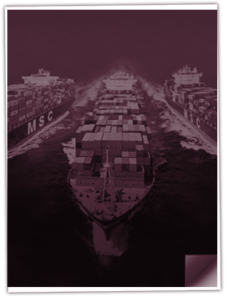
ZIM Makes Waves, Just Don't Ask How The Sausage Is Made
Compliance, It's Electric (Boogie Woogie Woogie)!
The Belly Is Back—In a Good Way!
Dirty Snow & Frozen Freight (The Slush Edition)
ZIM Makes Waves, Just Don't Ask How The Sausage Is Made
- We’ll admit it: this story is everywhere. We don’t usually jump into every shipping current, but this one pulled us in like a riptide.
- A $4.2B move doesn’t just ripple—it resets the tide table. ZIM isn’t just bobbing… it’s making waves big enough to splash every alliance.
- Hey, ZIM adds shakshuka and shawarma to Hapag’s blutwurst, labskaus, and mett! We dare our brave readers to investigate these culinary “delights”!
- Germany’s Hapag-Lloyd AG plans to acquire Israel’s ZIM Integrated Shipping Services in an all-cash deal worth ~$4.2B. (For context, we believe the largest deal in maritime history was COSCO’s 6.3B purchase of OOCL).
- Clean structure, messy kitchen—this dishy deal still needs shareholder approval and a full spread of regulatory clearances.
- If completed, the combo ranks #5 globally with 400+ vessels and ~9% of global capacity. That’s a pretty full plate.
- Strategy: bulk up faster than shipyards can deliver, strengthen East–West and Med trades, and flex in a softer rate market.
- A carve-out creates a “New ZIM” to preserve Israel’s maritime capability—because some recipes (like national defense) stay close to home.
- Labor unrest is already bubbling, with strikes over job security and role transitions.
- Political scrutiny in Israel is heating up as officials weigh independence and resilience.
- Bottom line: if you love international trade… don’t ask how the sausage is made.
- We don’t chase every current—but when the tide, the kitchen, and the guest list all change at once, we’re watching what’s being served!
Custom Bonds or Bondage?!
- (Best title ever!)
- CBP logged 27,479 bond insufficiencies in FY2025 totaling $3.6B. That’s not a stretch—that’s a snap heard around the supply chain.
- A bond becomes insufficient when duties exceed coverage. Translation: things just got restrictive (and expensive).
- Tariffs hit $30B in January alone. Pressure is building—and it’s not loosening.
- The classic $50K bond? That barely gets you in the door now. Exposure can climb to $450M.
- Bonds scale at ~10% of duties, so when tariffs inflate, so does the squeeze.
- Sureties are reporting increases of 200%+, with one case hitting 550%. That’s not an adjustment—that’s full cinch mode.
- (PS: It is well past time to buy stock in surety companies!)
- If your bond fails, your freight doesn’t move. No release, no flexibility—just waiting.
- Fixing it takes 10+ days… plenty of time to rethink your coverage choices.
- Bottom line: check your limits now, before things get painfully tight.
- Pressure building? Talk to us at [email protected] before your freight feels the squeeze.
MAP: X Marks the Cost
- The Maritime Action Plan (MAP) promises to rebuild U.S. shipbuilding—but importers see a treasure map where every route leads to higher costs.
- The goal: strengthen domestic capacity and maritime security. Admirable? Yes. Expensive? Also yes.
- The headline: potential fees on foreign-built vessels calling U.S. ports. Because nothing says “welcome” like a cover charge.
- Even small per-unit fees can snowball into meaningful landed cost increases—death by a thousand doubloon cuts (well additions…jeesh, this joke should get the X).
- Supporters call it long-term strategy; critics see distorted trade flows and retaliatory risk. Every map has dragons, after all.
- We’ve seen versions of this chart before, especially during U.S.–China tension spikes.
- If this gets inked into policy, expect pricing shifts, contract tweaks, and rerouted trade lanes. If you love COSCO, give them a call… and a hug.
- This isn’t really about navigation—it’s about how much treasure gets buried in your cost structure.
- Speaking of X, what do we have to do to get scolded on X or Truth Social??!! We need the publicity in this desert of a shipping market, gang!
Compliance, It's Electric (Boogie Woogie Woogie)!
- You can’t see it… it’s electric. You gotta feel it… in your compliance workflow. CBP has officially plugged the industry into the grid. Paper is out, timing is tighter, and everything is humming with just a little more voltage.
- Recharged & Rewired (It’s Electric!)
- As of February 6, 2026, CBP issues all refunds via ACH. Paper checks? Extinct.
- On February 13, CBP clarified how rejected ACH refunds and returned checks are handled.
- If your refund fails because your banking info is wrong, no interest accrues under 19 U.S.C. § 1505(d). Translation: CBP is not tipping for user error.
- To fix a rejected refund:
- Enroll in ACH in ACE
- Email CBP’s Refund Team at [email protected] to confirm and request reissuance
- Replacement refunds arrive in 4–6 weeks after acceptance. Not instant… but at least it’s on the grid.
- Federal Register details here:
https://www.federalregister.gov/documents/2026/01/02/2025-24171/electronic-refunds - CBP replacement guidance here:
https://www.cbp.gov/trade/priority-issues/revenue/replacement-checks
- Bonds Go Digital (It’s Restrictive)
- CBP proposes moving most Customs bonds to electronic-only submission. Paper bonds are getting ghosted.
- Centralized, streamlined, and—let’s be honest—a bit tighter. Less wiggle room, more structure.
- This aligns with broader ACE automation. Everything’s plugged in, and everything’s tracked.
- Comments due April 14, 2026.
- Full proposal here:
https://www.federalregister.gov/documents/2026/02/13/2026-02961/electronic-bond-transmission
- Manifest Destiny (It’s Also Electric!)
- CBP proposes earlier electronic export manifest (EEM) submission for vessel cargo.
- Core data (8 elements) due 24 hours before loading.
- Additional data due 2 hours prior.
- Miss it? Expect:
- 2H Documentation Holds
- 1H Enforcement Holds
- Penalties: $5,000 per violation, up to $100,000 per conveyance. That’s a shocking bill!
- Full 61-page rule here (bring coffee):
https://www.federalregister.gov/documents/2026/02/10/2026-02662/electronic-export-manifest-for-vessel-cargo
- Bottom line: compliance isn’t just evolving—it’s electric. Faster timing, tighter controls, and zero tolerance for unplugged processes. If your program isn’t fully wired, you’re going to feel the shock. Stay “current” by contacting [email protected].
The Belly Is Back—In a Good Way!
- During the pandemic, bellyhold capacity vanished like gym motivation in February. Now? The belly’s back—and it didn’t come back shy.
- Global air cargo capacity is up ~5% YoY, with wide-bodies once again carrying people upstairs and serious freight downstairs.
- Shippers want rhythm—frequency, predictability, clean connections. Passenger networks deliver like a metronome.
- New entrants like Riyadh Air are building cargo into the plan from day one. This isn’t leftover space—it’s a designed midsection. Who knew chubby was the new skinny?!
- Bellyhold now acts as a pressure valve when freighters tighten. A little extra cushion goes a long way.
- Let’s address the elephant in the room: the belly didn’t just return—it expanded, structured, and started lifting heavy again.
- Call it what it is—the undercarriage matters. And right now, it’s carrying its weight (and maybe a little extra)!
Dirty Snow & Frozen Freight (The Slush Edition)
- The storm is gone—but freight is still stuck in its aftermath. What hit the coasts has drifted inland, piling up in Chicago, Cincinnati, and Memphis.
- Linehaul has thawed, but terminals are pure slush—containers stuck, transfers slow, exports dragging.
- Drayage drivers are idling in multi-hour lines while fees tick like a cab meter in a snowstorm.
- BNSF, Norfolk Southern, and Union Pacific are battling mismatched equipment, labor gaps, and operational ice patches.
- And just to keep things frosty, new FMCSA CDL rules could sideline up to 194,000 drivers.
- Fewer drivers + terminal congestion = a long, gray winter hangover.
- Fresh snow is pretty. This is the gritty, curbside sludge that lingers for weeks.
- The storm made the mess—but this? This is what sticks around.